 PlaceTube
11 Best Places to visit in Mali 🇲🇱 - 4k Travel Video
Open in PlaceTube Watch on YouTube
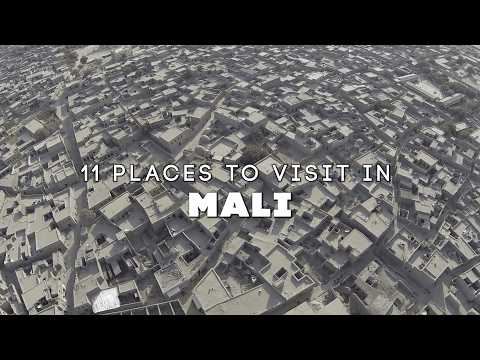
Places in this video
- Bamako ▶ 1:07
The capital on the Niger River, described as the beating heart of modern Mali, blending French colonial relics with West African vibrancy, markets, music and museums.
- National Museum of Mali ▶ 1:56
Called one of West Africa's finest museums, with ancient artifacts, textiles, masks, Dogon carvings, Bambara ritual objects and Tuareg jewelry, plus contemporary Malian art.
- Grand Marché de Bamako ▶ 2:45
A bustling market full of colorful fabrics, leather goods, silver jewelry, spices and famed bogolan mudcloth, where Bambara and Tuareg traders mix.
- Ségou ▶ 4:26
A charming city on the Niger with colonial architecture, tree-lined boulevards, riverside cafes and a rich pottery and artistic heritage, once capital of the Bambara Kingdom.
- Ségou pottery and craft villages ▶ 5:17
Craft villages where artisans mold clay into pots and water jars using centuries-old techniques, offering an authentic glimpse into Ségou's pottery tradition.
- Festival sur le Niger ▶ 5:49
Held every February, it transforms Ségou into a stage with performances on floating stages along the river, plus art exhibitions, craft fairs and workshops.
- Mopti ▶ 6:38
Known as the Venice of Mali, sitting at the confluence of the Niger and Bani rivers, with canals, busy ports and markets, and a gateway to Dogon country and Timbuktu.
- Mopti Mosque ▶ 7:29
A Sudano-Sahelian mudbrick mosque dominating the skyline, with minarets decorated with protruding wooden beams, at the heart of Mopti's daily life.
- Niger River Port of Mopti ▶ 8:16
A spectacle of activity where traditional wooden pinasses ferry goods and people; a boat ride offers views of riverside villages and life along the Niger.
- Hombori Tondo ▶ 8:48
Mali's highest point at about 1,155 m in the Hombori Massif, with dramatic cliffs, pillars and the Hand of Fatima needles, offering hiking and technical climbing.
- Djenné ▶ 10:28
A historic city dating back to the 3rd century BC that flourished as a center of trade and Islamic scholarship, with timeless streets and its iconic mosque.
- Great Mosque of Djenné ▶ 11:00
The world's largest mudbrick building and a UNESCO World Heritage site, replastered each year by the community in a festival symbolizing renewal and unity.
- Djenné Market ▶ 11:50
On Mondays Djenné comes alive with one of West Africa's most famous markets, selling salt, spices, livestock, textiles and handicrafts beneath the mosque.
- Bandiagara Escarpment ▶ 12:39
Known as Dogon country, a 150 km sandstone cliff dotted with ancient villages, a UNESCO World Heritage site celebrated for natural beauty and Dogon culture.
- Dogon villages ▶ 13:27
Villages famed for conical thatched granaries and cliffside dwellings, some built by the Tellem, with narrow paths between mudbrick houses and low-roofed meeting places.
- Dama dance ▶ 14:16
A Dogon funeral rite celebrating the passage of souls, with dancers in tall colorful masks moving to drums and chants as a sacred act binding the community to ancestors.
- Timbuktu ▶ 14:46
The legendary city at the edge of the Sahara where caravans laden with salt and gold met scholars, enduring as a city of mystery and learning.
- Djinguereber Mosque ▶ 15:20
One of Timbuktu's three great mosques, built from mud and timber in Sudano-Sahelian style, a monument to West African Islamic scholarship.
- Sankore Mosque ▶ 15:20
A great mosque that was also a university housing tens of thousands of manuscripts, making Timbuktu an intellectual capital in the 15th and 16th centuries.
- Sidi Yahya Mosque ▶ 15:20
The third of Timbuktu's great mud-and-timber mosques, a masterpiece of Sudano-Sahelian architecture and enduring place of worship.
- Ahmed Baba Institute ▶ 16:25
A library working to preserve and digitize ancient Timbuktu manuscripts covering science, medicine, astronomy, law and poetry, written in elegant Arabic script.
- Gao ▶ 16:57
Once the capital of the Songhai Empire on the Niger River in eastern Mali, a quieter city today whose monuments and cultural echoes remain deeply moving.
- Tomb of Askia ▶ 17:14
A striking pyramidal mud structure built in 1495 by Emperor Askia Muhammad, a UNESCO World Heritage site symbolizing the grandeur of the Songhai Empire.
- Boucle du Baoulé National Park ▶ 18:20
One of Mali's largest protected areas in the Kayes/Koulikoro region, covering dry savannah, riverine forest and scrub, with prehistoric rock art, tombs and important bird life.
- Sahara Desert of northern Mali ▶ 19:44
Northern Mali opens into the vast Sahara, where Tuareg nomads traverse ancient caravan routes; travelers can trek by camel and camp under vast skies.
- Tuareg communities of the Sahara ▶ 20:02
The Tuareg, known as the blue people for their indigo robes, share tea under the stars and desert stories, revealing a lifestyle adapted to the harshest environments.
- Niger Inland Delta ▶ 21:09
One of Africa's great wetlands, a seasonal floodplain of waterways, lakes and islands, a paradise for birdwatchers with pelicans, herons and flamingos.
- Bozo fishing villages ▶ 22:15
The Bozo, masters of the river, inhabit the delta with centuries-old fishing traditions; their colorful boats, songs and festivals are part of its living heritage.
Cities in these videos
Bamako · Ségou · Mopti · Hombori · Djenné · Bandiagara · Timbuktu · Gao · Kayes