 PlaceTube
Topkapı Sarayı Hareminin Gizli Kapıları Açıldı: Cariyeler ve Sultan Eşleri Burada Yaşadı
Open in PlaceTube Watch on YouTube
Places in this video
- Topkapı Palace ▶ 2:26
The presenter opens the video at Topkapı Palace and explores its Harem sections, many opened to the public for the first time.
- Topkapı Palace Harem ▶ 2:55
The video tours the Harem, including the Ladies' and Concubines' Quarters, kitchen, pantry, toilets and laundry, newly opened to visitors.
- Cümle Gate ▶ 4:33
The presenter enters the Harem through its main entrance, the Cümle Gate.
- Courtyard of the Ladies and Concubines ▶ 5:03
The courtyard where the Sultan's wives and concubines lived, now fully opened to visitors, is the focus of the tour.
- Concubines' Bath ▶ 5:23
The bath was previously the only accessible part of this courtyard; the presenter notes it was heated by the Külhan furnace.
- Chambers of the Consorts ▶ 7:07
The presenter corrects the claim of four apartments, showing three magnificent concubine chambers with tiled walls, fireplaces and private bathing areas.
- Twin Pavilions ▶ 15:02
The asymmetrical structure built by Mimar Sinan with 16th-century tiles, which historians believe may be where Hürrem Sultan lived.
- Concubines' Quarters ▶ 19:34
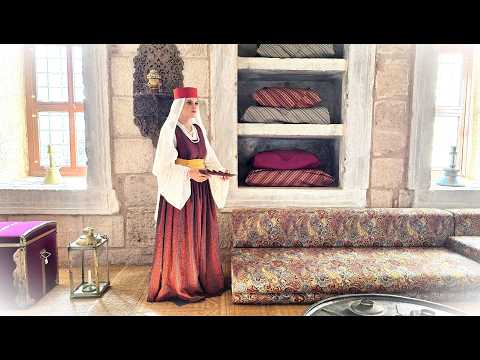
The two-story dormitory where 60 to 80 unmarried concubines lived together, decorated with items reflecting their daily life and musical training.
- Külhan (Furnace) ▶ 24:15
The furnace that heated the concubines' bath through hot-air ducts under the floor, an improved version of Roman heating.
- Concubines' Pantry ▶ 25:34
A warehouse-like section where dry foods, spices, sweets, sherbets, jams and pickles for the concubines were stored.
- Concubines' Kitchen ▶ 28:18
The kitchen where meals sent from the main palace kitchens were distributed and organized, and small-scale cooking was done.
- Concubines' Toilet ▶ 30:22
Each toilet was a separate unit with a door for privacy, which the presenter finds remarkably modern.
- Concubines' Laundry ▶ 32:03
The laundry where clothes were washed in cauldrons, soaped and rinsed in stone troughs, then hung to dry.