 PlaceTube
Walking Tour Through China's Most Developed and Futuristic Metropolis: Shanghai | LuJiazui | Bund
Open in PlaceTube Watch on YouTube
Places in this video
- The Bund ▶ 1:08
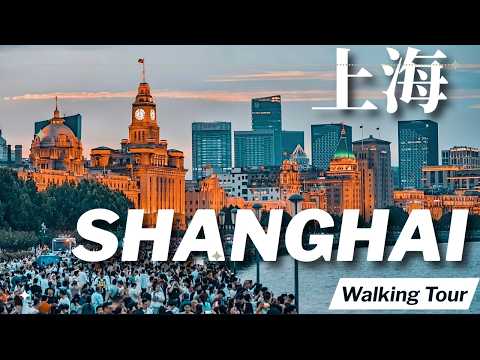
The presenter describes the Bund as Shanghai's iconic 1.5-kilometer waterfront along the Huangpu River, known for colonial-era architecture and glittering views of the Lujiazui skyline, especially at night.
- Nanjing Road ▶ 1:06:50
The presenter calls Nanjing Road one of the world's busiest shopping streets, spanning 5.5 kilometers with luxury boutiques, historic department stores, and lively evening light displays.
- Lujiazui ▶ 1:38:45
The presenter describes Lujiazui as Shanghai's financial heart, home to the Shanghai Tower, Jin Mao Tower, and Shanghai World Financial Center, with futuristic design and observation decks.
- Oriental Pearl Tower ▶ 1:46:30
The presenter highlights the 468-meter Oriental Pearl Tower with its futuristic spheres housing observation decks, a revolving restaurant, and a museum, plus a glass-floored walkway and pink night lighting.
- China Art Museum ▶ 2:05:40
The presenter describes this museum in the former China Pavilion of the 2010 World Expo, with its red inverted pyramid structure holding over 14,000 works of traditional and contemporary Chinese art.
- Wukang Building ▶ 2:31:45
The presenter presents the Wukang Building, a 1924 French Renaissance-style apartment with a curved facade and red-tiled roof, as a protected heritage site epitomizing Shanghai's 1920s architectural golden age.
- Wukang Road ▶ 2:31:51
The presenter describes Wukang Road as lined with plane trees and art deco villas, a quiet retreat popular for cafes and boutique shops.
- Jing'an Temple ▶ 2:55:35
The presenter describes Jing'an Temple, founded in 247 CE, as a Buddhist sanctuary with a golden roof and 15-ton silver Buddha statue, surrounded by skyscrapers and luxury malls like Plaza 66.
- Yuyuan Station ▶ 3:04:40
The presenter notes Yuyuan Station's artistic installations, arched ceilings, and porcelain-inspired murals depicting scenes from Shanghai's past, calling it a cultural gateway to Yuyuan Garden.
- Yuyuan Garden ▶ 3:06:57
The presenter mentions the bustling street adjacent to Yuyuan Garden, specializing in traditional crafts, silk, and local snacks like xiaolongbao amid Ming-dynasty-style architecture.
- Huxinting Teahouse ▶ 3:07:04
The presenter describes the Huxinting Teahouse, built in 1784, as a serene spot to experience tea culture amid the lively market chaos.
- Shanghai City God Temple ▶ 3:10:17
The presenter describes the Taoist City God Temple, centered in a Ming-dynasty historic street, with golden statues and incense-filled halls hosting rituals for blessings and prosperity.
- Huangpu River Ferry ▶ 3:33:47
The presenter describes a 2-yuan, 15-minute ferry ride across the Huangpu River passing under the Nanpu Bridge, offering views of the Bund's colonial buildings and Lujiazui's skyscrapers.
- 1,000 Trees ▶ 3:44:39
The presenter describes this riverside complex by Thomas Heatherwick, dubbed the 'Hanging Gardens of Shanghai,' with 1,000 concrete columns topped with trees and staggered terraces hosting galleries and cafes.
- HAUS Shanghai ▶ 4:02:29
The presenter describes this experimental space in a former factory, with surreal installations like the 'GM Giant' exhibition of oversized dystopian sculptures critiquing consumerism and technology.
- Xintiandi ▶ 4:28:32
The presenter describes Xintiandi as revitalized 1920s Shikumen stone-gate houses turned into a chic pedestrian zone blending history and modernity.
- Global Harbor ▶ 5:25:48
The presenter describes Global Harbor as one of Asia's largest malls, mimicking Venice with indoor canals, gondolas, and a painted celestial ceiling, housing luxury brands, an ice rink, and a cinema.
- Xujiahui ▶ 5:51:47
The presenter describes Xujiahui as a tech and retail nexus with mega-malls, underground corridors, electronics markets, and historic sites like St. Ignatius Cathedral.
- St. Ignatius Cathedral ▶ 6:13:57
The presenter describes this Gothic Revival cathedral with twin red-brick spires and stained-glass windows, a spiritual landmark surrounded by skyscrapers hosting Masses in Chinese and English.
- Site of the First National Congress of the Chinese Communist Party ▶ 9:06:21
The presenter mentions cobblestone alleys leading to international restaurants, boutique stores, and the site of the Chinese Communist Party's First Congress.