 PlaceTube
UNSEEN OREGON: Hidden Places You Won't Believe Exist! | 4K Travel Documentary
Open in PlaceTube Watch on YouTube
Places in this video
- Jawbone Flats ▶ 0:37
The presenter describes the empty buildings of a former mining camp that still stand after the site was shut down and the last residents left.
- Pillars of Rome ▶ 1:03
The presenter describes these large rock formations that once served as a reference point for early pioneers, and later explains they are made of volcanic ash and soft lake sediments.
- Smith Rock State Park ▶ 1:44
The presenter calls it a natural playground of massive cliffs, sharp spires and a winding river, and says this is where modern sport climbing was born.
- Shaniko ▶ 4:49
The presenter explains Shaniko grew as a wool shipping center called the wool capital of the world, then declined after a rival railroad and two fires; today it is a quiet near-ghost town with an active ghost hotel.
- Cannon Beach ▶ 5:54
The presenter says the town is named after a cannon that washed ashore from a sunken ship, survived a tsunami, and hosts an annual sand castle contest.
- Haystack Rock ▶ 7:08
The presenter describes the 235-foot sea stack reachable at low tide, with tide pools full of starfish, crabs and anemones, and notes part of it was blasted in the late 1960s to stop climbing.
- Antelope ▶ 8:41
The presenter recounts how this quiet ranching community became a self-sufficient settlement of thousands before dark events, arrests and the leader's deportation caused the commune to fall apart.
- Crater Lake National Park ▶ 9:38
The presenter says the park holds the deepest lake in the United States, formed when Mount Mazama collapsed, and describes its incredibly clear water and fish stocked by people carrying buckets up the mountain.
- Wizard Island ▶ 10:31
The presenter describes this cone-shaped island built by smaller eruptions, with the Witch's Cauldron crater at its summit that drains rainwater and seeps toxic volcanic gases.
- Sumpter ▶ 13:05
The presenter tells how five men found gold in a creek and built a town that became the Queen City, home to a massive gold dredge and the ghost Joe Bush, before a fire burned it down.
- Heceta Head Lighthouse ▶ 14:10
The presenter says it shines the brightest light on the Oregon coast, its beam stretching 21 miles, and that the old assistant keeper's house is now a bed and breakfast with a ghost named Rue.
- Pilot Rock ▶ 15:51
The presenter describes this giant stone thumb formed by hardened magma, used by pioneers as a compass, and notes nine planes have crashed in the rocks because pilots couldn't see it through fog.
- Granite ▶ 18:01
The presenter explains Granite started after gold was spotted in a creek on the 4th of July, was once rowdy with five saloons, and is now a rare semi-ghost town with leaning wooden buildings.
- Cape Perpetua ▶ 19:26
The presenter says it rises 800 feet above the ocean as the highest point accessible by car on the coast, named after sailors were stuck looking at the same cliff for days.
- Devil's Churn ▶ 20:03
The presenter describes a narrow crack in the rocks where waves collide from both ends and blast water high into the air.
- Thor's Well ▶ 22:35
The presenter describes a large hole in the rocks that seems to drain the ocean, bursting like a geyser at high tide, with a legend that the Norse god Thor struck the ground to create it.
- Golden ▶ 23:44
The presenter says Golden was a gold mining camp turned into the only mining town in the west with two churches and no saloons, with a fake cemetery left by a film crew and an abandoned church said to hold demons.
- Painted Hills ▶ 24:24
The presenter explains the colorful layers formed from ancient volcanic ash and muddy soil, with colors from different metals, and that the bare clay soil bursts into vivid reds and golds when it rains.
- Greenhorn ▶ 27:01
The presenter says the town got its name from greenhorn miners and a large green rock landmark, once had hotels, saloons and a famous stolen jail, and is now the smallest incorporated city with no permanent residents.
- Columbia River Gorge ▶ 27:53
The presenter says the gorge was carved by the biggest floods in Earth's history, with lava creating tall columnar cliffs, and that it is famous for its waterfalls and diverse ecosystems.
- Latourell Falls ▶ 29:02
The presenter describes water tumbling straight down cliffs draped in green lichen, framed by towering hexagonal basalt columns.
- Vista House ▶ 30:04
The presenter calls it a stone observatory on a rocky point where drivers once stopped to rest, joking it became the most expensive public bathroom in the world with Italian marble floors.
- Multnomah Falls ▶ 30:57
The presenter says it is Oregon's tallest waterfall, spilling down dark cliffs in two tiers with a stone bridge between them, and that it turns into a tower of ice in freezing winters.
- Susanville ▶ 32:12
The presenter tells how miners in this one-street mining camp stole the town's post office to bring it closer to their claims, and that on Saturday nights up to a thousand miners crowded the street.
- Willamette Valley ▶ 32:53
The presenter describes fertile black soil, extinct volcanoes rising from farmland, and over 500 wineries, with harvest crews hand-picking Pinot Noir grapes in the early morning chill.
- Fort Rock Cave ▶ 35:39
The presenter says the cave lies within a volcanic hill and that dozens of woven sagebrush sandals were discovered in its layers, evidence humans used it as a home base.
- Mount Hood National Forest ▶ 36:23
The presenter describes a volcano built by lava and mud flows with sharp ridges, one wet mossy side and one dry side, steam still escaping near the top, and strange lights floating through the trees at night.
- Little Crater Lake ▶ 37:56
The presenter says this tiny pool stays freezing cold year-round from a constant underground spring, is so clear you can see the bottom, and swimming is now banned.
- Whitney ▶ 39:07
The presenter explains Whitney grew around logging and a large sawmill, nearly died when it burned, and became a ghost town on private ranch land with no-trespassing signs.
- Crater Lake Lodge ▶ 42:33
The presenter says the lodge sits at the edge of the lake, is open only late spring through early fall, and guests report footsteps in empty halls, flickering shadows and cold spots.
- Willamette National Forest ▶ 43:12
The presenter describes towering volcanic peaks, narrow canyons, waterfalls and old-growth trees, with river otters hunting fish in the cold streams.
- Proxy Falls ▶ 45:38
The presenter says the water drops from a high basalt cliff of porous lava rock and sinks underground instead of pooling below, and where it goes next is a mystery.
- McKenzie River ▶ 46:40
The presenter says the vanished water likely reappears here, running crystal clear, filtered and cooled through lava chambers, flowing steadily all year from snowmelt stored underground.
- Koosah Falls ▶ 47:24
The presenter describes water crashing about 70 feet over hard basalt rock into a turquoise pool, its name meaning sky in Chinuk jargon.
- Cornucopia ▶ 50:08
The presenter says the town was named Horn of Plenty for its gold, was one of the roughest mining camps with shootings and saloons, and emptied within months when World War II shut down the gold mines.
- Bandon ▶ 51:14
The presenter explains Bandon was named after an Irish town, was burned twice by fires fueled by gorse, and rebuilt into a diverse welcoming community.
- Bandon Beach ▶ 52:08
The presenter describes wide sandy stretches and dramatic cliffs, famous for sea stacks that look like elephants, tables or a face, with tide pools hiding starfish, crabs and anemones.
- Coquille River Lighthouse ▶ 53:23
The presenter says it has stood through storms and fog for over a century, guiding ships through shifting sandbars, and was restored so visitors can explore it and hear old sea stories.
- Purple Vetch Hills ▶ 55:57
The presenter describes hills covered in thick mats of purple vetch that hold the soil in place and attract hundreds of bumblebees.
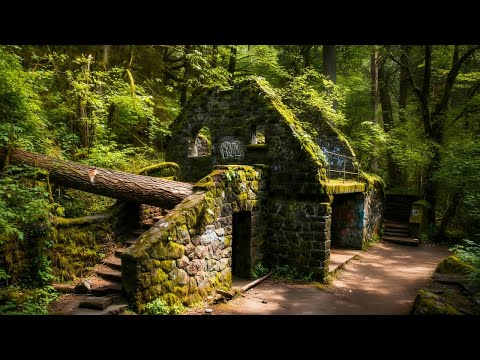
- Witch's Castle ▶ 58:58
The presenter says these are the ruins of a stone park caretaker's house and bathrooms, nicknamed for their castle-like look, popular with hikers and said to have cameras die mysteriously nearby.
- Eel Lake ▶ 59:59
The presenter says it formed when the ocean rose after the ice age and was trapped behind sand dunes, warming enough in summer for swimming, kayaking and paddle boarding.
- Tillamook Rock Lighthouse ▶ 1:02:40
The presenter says this lighthouse, nicknamed Terrible Tilly, sits alone on a jagged rock more than a mile out at sea, where no keeper lasted long, and was later turned into a columbarium.
- Devil's Punch Bowl ▶ 1:03:51
The presenter describes a giant bowl carved into the coastline where two sea caves broke through, with red and yellow sandstone walls, tide pools at low tide and churning water at high tide.
- Deschutes National Forest ▶ 1:06:39
The presenter describes forests, meadows, lakes and volcanic areas with lava flows, obsidian fields and underground lava tubes, plus hiking, paddling and skiing on Mount Bachelor.
- Mount Hood ▶ 1:08:40
The presenter calls it a massive cone in the Cascade range that often emits steam or minor eruptions, a reminder the ground is still active.
- Sparks Lake ▶ 1:09:42
The presenter says this shallow lake was created when lava flows blocked river paths, named after pioneer cattleman Lee Sparks, with water seeping through volcanic rock and locals telling of mysterious noises.
- Tumalo Falls ▶ 1:11:45
The presenter says the falls formed where a stream reaches an old lava field, creating a sudden drop. Later the video returns to Tumalo Falls, noting its icy snowmelt and that more waterfalls lie upstream.
- Cape Blanco ▶ 1:12:00
The presenter describes a flat headland about 200 feet above the water with cliffs shaped by waves and wind, rising slowly each year and possibly one day becoming an island.
- Cape Blanco Lighthouse ▶ 1:13:50
The presenter says it is visible from 22 miles away, powered by one of the oldest electric motors, and visitors can climb the spiral staircase to see the restored French lens.
- Buncom ▶ 1:14:38
The presenter calls it one of the best-kept ghost towns in southern Oregon, founded as a gold mining camp, with a few original buildings preserved and swarms of horse flies in summer.
- Lincoln County ▶ 1:16:04
The presenter describes a coastal area known for long beaches, lively fishing towns and colorful rocks like jasper and agates washing up after storms.
- Lincoln City ▶ 1:16:36
The presenter says Lincoln City isn't a real historic town but seven small towns that voted to merge, and they almost called it Miracle Beach or Surfland.
- Siletz Bay ▶ 1:16:57
The presenter describes a tidal estuary where river water meets the ocean, shrinking by half at low tide to reveal mud flats where people dig clams.
- Yaquina Head Lighthouse ▶ 1:18:04
The presenter says it is the tallest lighthouse in Oregon, with an original French glass lens visible 19 miles out to sea, and a story of a worker who supposedly fell between the walls.
- Oregon Dunes ▶ 1:19:26
The presenter describes roughly 40 miles of dunes, one of the biggest sand dune areas in the region, with quicksand, off-road vehicles and sanderlings running along the shore.
- Lafayette Cemetery ▶ 1:24:42
The presenter says this mostly forgotten cemetery is said to hold the grave of a woman accused of being a witch who cursed the town to burn, and is off limits after dark.
- Hell's Canyon ▶ 1:26:20
The presenter calls it the deepest river gorge in North America, carved by the Snake River, mostly wild with no roads inside and a scorching desert bottom below a freezing forest rim.
- Alvord Desert ▶ 1:27:39
The presenter describes a huge dry lake bed of cracked salt and minerals, one of the windiest spots around, with hot springs bubbling up and wild horses coming to drink.
- Willamette Falls ▶ 1:30:25
The presenter says it is the country's second largest waterfall by volume, dropping in a wide horseshoe shape, and was hidden behind factory buildings for over a century and a half.
- Rogue River ▶ 1:33:12
The presenter describes the river cutting through hard mineral-rich rock and making a sharp 180-degree turn around a giant quartz rock.
- Mill Creek Falls ▶ 1:34:00
The presenter says the waterfall plunges about 173 feet into the Rogue River Gorge with a roar heard from far away, and local lore speaks of lost gold buried nearby.
- Lost Creek Lake ▶ 1:34:50
The presenter says the lake was created by a huge dam that controls flooding and provides electricity, mixing warm and cold water to keep the river safe for salmon.
- Silver Falls State Park ▶ 1:36:52
The presenter says it is Oregon's largest park, famous for the Trail of Ten Falls where visitors can walk behind four waterfalls including the 177-foot South Falls.
Cities in these videos
Terrebonne · Cannon Beach · Antelope · Sumpter · Granite · Bandon · Lincoln City