 PlaceTube
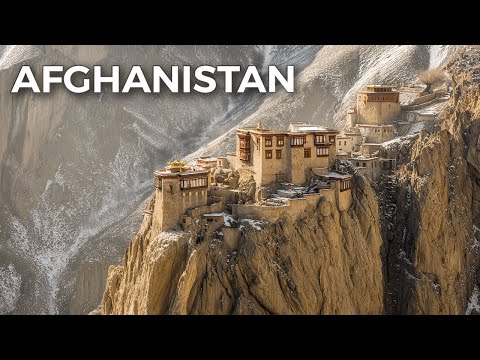
AFGHANISTAN: The Real Untouched World Hidden in Plain Sight | Travel Documentary
Open in PlaceTube Watch on YouTube
Places in this video
- Kabul ▶ 2:15
The presenter introduces Kabul as a city with over 3,500 years of history, a Silk Road crossroads and Afghanistan's largest economic and political center where Persian, Central Asian and Indian influences converge.
- Bagh-e Babur (Babur Garden) ▶ 4:22
A rare moment of calm in Kabul, the burial place of Emperor Babur and the oldest surviving Mughal garden in Afghanistan, restored by the Aga Khan Trust for Culture since 2002.
- Darul Aman Palace ▶ 6:10
A European neoclassical palace in the hills west of Kabul, burned three times in war and rebuilt in 2019 as a symbol of a resilient Afghanistan.
- Bala Hissar ▶ 8:21
One of Afghanistan's oldest fortresses, with origins reaching back to the 5th century BCE, passed from empire to empire and later used as a royal palace and military fortress.
- Shah-Do Shamshira Mosque ▶ 9:54
A distinctive early 20th-century mosque built under King Amanullah Khan, its name meaning 'King of Two Swords', with an unusual European baroque style and flocks of pigeons on its steps.
- Sakhi Shrine ▶ 11:30
A shrine dedicated to Hazrat Ali with turquoise domes and intricate tile work, revered by locals and pilgrims as a living heartbeat of faith in Kabul.
- Taq-e Zafar (Arch of Victory) ▶ 13:15
A European-style triumphal arch at the edge of Kabul near Paghman, inspired by the Arc de Triomphe and restored in 2014 as a symbol of renewal.
- Mahipar Pass ▶ 15:23
A dramatic mountain pass on the Kabul-Jalalabad Highway, known as one of the world's most dangerous roads, where the road clings to sheer cliffs above the turquoise Kabul River.
- Hazarajat ▶ 16:46
The traditional homeland of the Hazara people in the central highlands, a land of fallen empires with a distinct Shia culture preserved by geography and history.
- Bamyan ▶ 18:22
The cultural and historical center of the Hazara people, set among open fields, adobe homes and wide mountain views in the central highlands.
- Bamyan Valley ▶ 19:12
A UNESCO World Heritage valley that was a thriving Silk Road crossroads of Buddhist civilization, with countless hand-carved caves, monasteries and the world's earliest oil paintings.
- Shahr-e Zohak (Red City) ▶ 20:46
A crimson-stone fortress on a ridge overlooking the Bamyan Valley, a Ghorid stronghold destroyed by the Mongols in vengeance and now a silent monument to ancient warfare.
- Shahr-e Gholghola (City of Screams) ▶ 22:35
An ancient citadel whose name means 'city of screams', once a thriving Islamic stronghold whose population was massacred by the Mongol army, leaving sunbaked ruins over the valley.
- Band-e Amir National Park ▶ 24:12
Afghanistan's first national park, a chain of six sapphire-blue travertine lakes on a high plateau, called the Pamukkale of Afghanistan or the Hindu Kush paradise lakes.
- Herat ▶ 26:38
A city with more than 2,500 years of heritage that reached its greatest brilliance under the Timurid Empire, reflecting the strongest Persian character among Afghan cities.
- Herat Citadel ▶ 28:22
An ancient fortress towering over the old city, its foundations linked to Alexander the Great and later expanded by the Ghaznavids, Ghorids and Timurids, now carefully restored.
- Great Mosque of Herat ▶ 31:22
Widely regarded as the largest and most beautiful mosque in Afghanistan, a Timurid masterpiece with deep blue mosaic tiles, four iwans and a luminous celestial presence.
- Panjshir Valley ▶ 34:54
A long narrow corridor framed by towering cliffs and snow-covered peaks, with emerald mines, terraced fields and orchards, homeland of Ahmad Shah Massoud and Afghanistan's natural fortress.
- Hindu Kush ▶ 36:41
A giant natural wall stretching nearly 800 km, the rugged backbone of Afghanistan, home to Siberian ibex and the Himalayan wolf and a barrier that shaped civilizations.
- Mazar-i-Sharif ▶ 39:20
The principal city of northern Afghanistan and a vital trade hub, known for its calm, clean architecture and open, orderly streets beneath white doves and blue domes.
- Blue Mosque (Shrine of Ali) ▶ 40:21
The city's greatest symbol, a Timurid masterpiece of deep blue glazed tiles and a turquoise dome, tied to Imam Ali and home to hundreds of protected white pigeons.
- Nowruz at the Blue Mosque ▶ 41:32
Each spring tens of thousands gather at the Blue Mosque to witness the raising of the sacred green flag, a ritual tied to Imam Ali believed to foretell the coming year.
- Balkh ▶ 43:09
One of the world's oldest continuously inhabited settlements, the cradle of Zoroastrianism and a Silk Road hub hailed as the mother of cities, where history lingers in every stone.
- Minaret of Jam ▶ 44:41
A 65-meter baked-brick tower built around 1190 under the Ghorid Empire, wrapped in Kufic calligraphy and Quranic verses, a UNESCO World Heritage site rising from a forgotten valley.
- Ghazni ▶ 46:37
Once the heart of an empire stretching from Iran to northern India and a great medieval center of science, literature and art, compared to Baghdad and Isfahan.
- Ghazni Minarets ▶ 47:10
A pair of towering baked-brick minarets carved with intricate geometric patterns and bold Kufic inscriptions, the city's most striking symbols of Islamic design.
- Citadel of Ghazni ▶ 47:45
A massive earthen mud-brick fortress built on a high hill above the city, its weathered walls bearing the scars of thousands of years of war and peace.
- Wakhan Corridor ▶ 48:44
A nearly 300 km corridor in far northeast Afghanistan, one of the most isolated regions on Earth, home to Marco Polo sheep, Wakhi farmers and Kyrgyz nomads in felt yurts.
- Mount Noshaq ▶ 51:39
At 24,580 ft the highest peak in Afghanistan, wrapped in permanent snow with razor-sharp ridges and glaciers, one of the least touched mountains in Asia.
- Nuristan ▶ 54:08
A province meaning 'land of light' where steep forested mountains plunge into deep valleys, long isolated and preserving unique cultures, wood carvings and ceremonies.
- Kandahar ▶ 56:37
The second largest city in Afghanistan, founded by Alexander the Great as Alexandria Arachosia and later the first capital of the Durrani Empire under Ahmad Shah Durrani.
Cities in these videos
Kabul · Bamyan · Herat · Panjshir · Mazar-i-Sharif · Balkh · Shahrak District · Ghazni · Wakhan · Nuristan · Kandahar