 PlaceTube
Leyton Walk - Dark Parish Secrets and a Ripper Victim
Joolz Guides - London History Walks - Travel Films ·
Open in PlaceTube Watch on YouTube
Places in this video
- Leyton ▶ 0:08
The presenter introduces Leyton, explaining its name comes from the River Lee and that it was recorded in the Domesday Book of 1086.
- Leyton Underground Station ▶ 1:30
He notes the station has had the Underground since the 1940s but a railway station has stood here since 1856, originally called Low Leyton.
- Leyton Mills Retail Park ▶ 2:35
The walk passes through this retail park, once a railway yard called Temple Mills linked to the Knights Templar, and heavily bombed in the war.
- Coronation Gardens ▶ 5:48
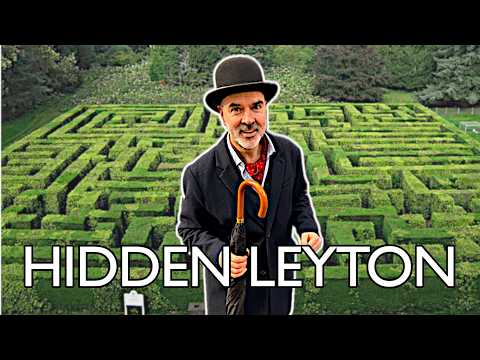
Laid out in 1902 for the coronation of King Edward VII, this park is a surviving piece of the original Epping Forest grass, and contains a small maze.
- Laurie Cunningham statue ▶ 7:03
They stop at a statue of Laurie Cunningham, the first black player to represent England at senior level and the first British player at Real Madrid, who played for Leyton Orient.
- Leyton Orient Football Club ▶ 9:29
The stadium sits plunked among residential streets; he notes Orient were only in the First Division once, in the 1960s.
- Leyton Almshouses ▶ 10:16
These almshouses date from 1885, but the first ones were founded in 1649 by John Smith, a joint purchaser of Leyton Manor.
- St Mary the Virgin Church, Leyton ▶ 10:49
The parish church has records dating back to 1200, with parts from the 17th century and a cupola with a clock originally from Leyton Great House; its account books record evicting pregnant women from the parish.
- Clifton House ▶ 12:26
A nice old-looking house on Church Road, though the presenter instead points out number 28 where Frank Muir lived.
- Former Stratford Cooperative Society building ▶ 14:02
This was the Stratford Cooperative Society, founded in 1862, with beehives as their symbol; it later merged into the London Cooperative Society.
- Sahara ▶ 14:35
He recalls boxer Amir Khan being robbed at gunpoint of a £70,000 watch at this grill.
- John Stripe House ▶ 16:17
Named after John Stripe who rebuilt the vicarage in the 1600s; the parish stocks and whipping post once stood just outside here.
- Walnut Tree House ▶ 17:04
The oldest house in Leyton, built in Tudor times; Benjamin Disraeli attended a school here and was expelled for fighting, and it later became a conservative club and now a mosque.
- Leyton Cricket Club ▶ 18:24
Bought by Essex Cricket Club in 1886, this was once the Essex county ground; its listed pavilion was designed by Richard Creed.
- Leyton Great House site ▶ 18:57
A plaque marks where the grand Leyton Great House, built in 1712, once stood before being destroyed; its cupola now sits atop the parish church.
- Leyton Old Police Station ▶ 21:23
A 1939 police station with reliefs of peelers and a traffic policeman, now converted into flats.
- Francis Road ▶ 22:26
A controlled zone with fancy cafes, including a record shop that sells coffee, which he compares to Walthamstow Village.
- Newport Road ▶ 23:14
He says this road follows the route of the underground Philly Brook river.
- Trinity Church Leyton ▶ 23:45
Pointed out as an example of the area's diversification, sitting next to a Gurdwara.
- Leyton Gurdwara ▶ 23:55
A Gurdwara next door to the church, apparently bought from the church as its former church hall.
- Islamic Sharia Council ▶ 24:01
Opposite the Gurdwara, one of Britain's leading bodies for mediating Muslim family matters and religious rulings, opened in 1982.
- Northcote Arms ▶ 24:33
A pub with a meridian line running through the bar, so you can stand in the western and eastern hemispheres.
- St Patrick's Catholic Cemetery ▶ 25:20
A massive cemetery from 1898 where Mary Jane Kelly, the last known Jack the Ripper victim, and Timothy Evans, wrongly hanged for the Christie murders, are buried.
- Leyton Town Hall ▶ 26:24
Built by the Leyton Local Board in 1883 and later replaced by a town hall next door, described by Pevsner as fussy but enjoyable in an eclectic Italian style; it is now a pub.