 PlaceTube
Santa Comba Dão: Hometown of Portugal's Dictator Salazar [4K]
Open in PlaceTube Watch on YouTube
Places in this video
- Santa Comba Dão ▶ 0:58
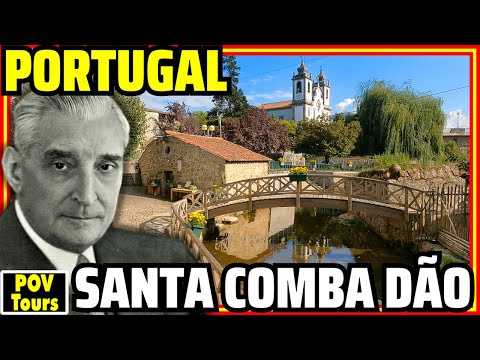
The presenter introduces Santa Comba Dão as a charming small city in central Portugal, birthplace of Salazar, and calls it one of his favorite small cities in the country.
- Avenida de Santo Estêvão ▶ 1:42
The presenter walks along Avenida de Santo Estêvão while explaining that the municipality has 10,500 people and the city proper only 3,000.
- Chapel of Saint Stephen ▶ 2:31
The presenter points out the Chapel of Saint Stephen as one of the sights in the city.
- Casa da Cultura ▶ 6:23
The presenter identifies this building as Casa da Cultura, a cultural center, while discussing Salazar's modest family background.
- Rua Mouzinho de Albuquerque ▶ 6:41
The presenter walks down Rua Mouzinho de Albuquerque while narrating Salazar's schooling in Vimieiro and Viseu.
- Misericórdia Church ▶ 8:42
The presenter shows the Misericórdia Church, inaugurated in 1755, the same year as the Lisbon earthquake.
- Rua Capitão Roçadas ▶ 9:08
The presenter walks along Rua Capitão Roçadas while discussing the 1910 revolution that overthrew the monarchy.
- Largo Rossio ▶ 10:24
The presenter stops at Largo Rossio and admires the picturesque houses around the square.
- Largo do Município ▶ 12:40
The presenter reaches Largo do Município, where the City Hall building stands.
- Santa Comba Dão City Hall ▶ 13:04
The presenter points out the City Hall building on Largo do Município.
- Rua Sacadura Cabral ▶ 15:12
The presenter walks along Rua Sacadura Cabral while describing Portugal's financial troubles during the First Republic.
- Rua António da Costa ▶ 16:51
The presenter continues through Rua António da Costa while discussing Portugal's entry into World War I.
- Rua Alexandre Herculano ▶ 18:06
The presenter walks down Rua Alexandre Herculano while narrating the 1926 military coup.
- Largo Alves Mateus ▶ 24:11
The presenter arrives at Largo Alves Mateus, where the Palace of Justice and a fountain with a Colonial Wars monument stand.
- Judicial Court of Santa Comba Dão ▶ 24:27
The presenter shows the Judicial Court (Palace of Justice) and notes that a Salazar statue once stood opposite it before being destroyed by a bomb in 1978.
- Mother Church of Santa Comba Dão ▶ 26:04
The presenter shows the Mother Church of Santa Comba Dão, another church inaugurated in 1755.
- Avenida da República ▶ 26:15
The presenter walks along Avenida da República near the Mother Church.
- Rua 15 de Agosto ▶ 28:57
The presenter walks along Rua 15 de Agosto while discussing Salazar's nationalism.
- Rua Dr. Manuel Rodrigues Coimbra ▶ 30:48
The presenter passes along Rua Dr. Manuel Rodrigues Coimbra, noting a coat of arms or National Union symbol.
- Chapel of Our Lady of Conception ▶ 31:17
The presenter points out the Chapel of Our Lady of Conception while discussing Salazar's support for Franco.
- Rua São Mateus ▶ 33:36
The presenter walks along Rua São Mateus while describing the PIDE secret police and the Tarrafal camp.
- Rua da Ribeira ▶ 37:14
The presenter walks down Rua da Ribeira while discussing Portugal's 1950s economic boom.
- Dão River ▶ 38:15
The presenter shows the Dão River, the waterway that gives the city part of its name.
- Vimieiro ▶ 38:32
The presenter heads to Vimieiro, a village of a few hundred inhabitants where Salazar was actually born.
- Rua Dr. António Perestrelo Botelheiro ▶ 38:56
The presenter walks along Rua Dr. António Perestrelo Botelheiro in Vimieiro.
- Avenida Dr. António de Oliveira Salazar ▶ 42:12
The presenter notes the avenue named after Salazar, remarking that such a name would be impossible almost anywhere else in Portugal.
- Salazar School ▶ 42:31
The presenter shows the Salazar School, a traditional Estado Novo elementary school built in 1942 that is set to become a museum dedicated to Salazar and the regime.
- Salazar's Birthplace ▶ 45:52
The presenter shows the modest house where Salazar was born in 1889, with a plaque commemorating the birth.
- Vimieiro Cemetery ▶ 50:26
The presenter explains that Salazar's coffin was carried to the small cemetery of Vimieiro, where he is buried in a plain grave next to his parents.