 PlaceTube
The REAL Japan Most People Will Never See | 4K Travel Documentary
Open in PlaceTube Watch on YouTube
Places in this video
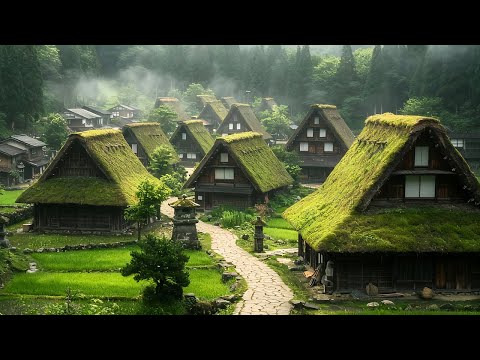
- Shirakawa-go ▶ 0:18
The video introduces Shirakawa-go as a village of gassho-style houses with steep thatched roofs built to withstand heavy snow.
- Ainokura ▶ 0:51
Ainokura is introduced as a remote valley village with wooden gassho-zukuri houses preserved across generations.
- Nachi Falls ▶ 0:51
Nachi Falls is described as Japan's tallest single-drop waterfall, sacred in the Kumano faith and marked by a white torii gate at its base.
- Ainokura Gassho-zukuri Houses ▶ 1:42
The presenter explains the 18th-century thatched houses, their rope-and-joinery construction, attic silk-worm floors, washi paper making and a thatched-roof temple above the village.
- Mount Fuji ▶ 2:58
Mount Fuji is described as three layered volcanoes with eight crater-rim peaks, along with its naming legends and history of summit restrictions.
- Aokigahara ▶ 4:17
Aokigahara is presented as a forest on hardened lava where compasses fail, trees grow twisted, and lava caves hold ice and ghost stories.
- Narusawa Ice Cave ▶ 5:47
Narusawa Ice Cave is a 156 m lava tube that stays near freezing year-round, with ice pillars and low ceilings visitors must crouch through.
- Pica Wild Bird Forest Park ▶ 6:52
The park is said to host over 200 kinds of wild birds and offers observation zones with telescopes near Mount Fuji.
- Ryugu Cave ▶ 7:50
Ryugu Cave is a lava tube with a collapsed ceiling opening, sheltering bats and birds, and linked to a sea-dragon deity legend.
- Shirakawa-go Gassho-zukuri Houses ▶ 10:03
The video details the north-south orientation, nail-free joinery, community rethatching and attic storage of Shirakawa-go's prayer-hand roofs.
- Takachiho Gorge ▶ 12:04
Takachiho Gorge is described as basalt columns carved by volcanic activity, with a clear river, waterfalls and a myth of the sun goddess hiding in a nearby cave.
- Matsuyama Castle ▶ 13:52
Matsuyama Castle is noted for using slope and sea as defenses, concealed firing gaps, maze-like paths and one of Japan's 12 original keeps.
- Kumano Kodō ▶ 15:24
The sacred pilgrimage routes through ancient cedar forests connecting shrines are described as maintained by local communities.
- Mount Nachi ▶ 16:18
Mount Nachi is said to host ancient shrines with rituals tied to wind and water, with aerial views of forested hills and farmsteads.
- Kumano Nachi Taisha ▶ 16:58
The shrine near Nachi Falls is described as a pilgrimage site where Shinto priests perform ritual offerings to the waterfall deity.
- Seiganto-ji ▶ 18:51
Seiganto-ji is one of Japan's oldest temples, with a vermilion three-story pagoda aligned to frame Nachi Falls and a sutra mound beneath the falls.
- Himeji Castle ▶ 20:49
The video mentions the Himeji area's mysterious mansion deaths before moving on, but the main Himeji content is the castle described later.
- Mount Kōya ▶ 22:56
Koyasan is presented as the center of Shingon Buddhism with sacred temples, forest shrines, stone lantern paths and a symbolic red bridge.
- Danjō Garan ▶ 23:12
The Danjō Garan complex is described as representing Buddhist cosmology through its careful layout and architecture.
- Tomogashima ▶ 24:09
Tomogashima's four uninhabited islands hold red-brick military forts, artillery batteries, tunnels and powder magazines, now eroding ruins.
- Nagoya Castle ▶ 26:33
Nagoya Castle is known for its golden shachihoko, massive stone walls, fire-resistant plaster and samurai quarters in the outer baileys.
- Yubari Ghost Town ▶ 27:39
The abandoned mining village is described with its riverside apartments, shared baths, supervisors' houses and a hospital left with records and medicines.
- Oshino Hakkai ▶ 28:31
Oshino Hakkai's ponds are described as purification points for pilgrims climbing Mount Fuji, tied to the Suikyo water rite.
- Hikone Castle ▶ 29:39
Hikone Castle is described as a hilltop fortress facing Lake Biwa with concentric moats, 75 embrasures and inner and outer blocks.
- Matsuo Mine ▶ 30:29
Matsuo Mine is described as East Asia's largest sulfur operation, with reinforced-concrete apartments and acidic drainage still being treated.
- Noboribetsu Onsen ▶ 31:53
The video describes the hot spring baths near the temple halls where pilgrims soak for relief from ailments and sorrow.
- Hiroshima Peace Memorial Park ▶ 35:18
The peace memorial grounds are described with monuments honoring victims, a cenotaph listing names and sculptures on peace and remembrance.
- Hiroshima Peace Memorial (Atomic Bomb Dome) ▶ 36:30
The preserved skeletal dome of the former Industrial Promotion Hall is described as a war relic confronting nuclear destruction and supporting disarmament.
- Lake Shikotsu ▶ 38:49
Lake Shikotsu is described as an ice-free caldera lake with clear, low-nutrient water, a central lava dome and geothermal warmth.
- Cape Shakotan ▶ 40:15
Cape Shakotan is known for steep cliffs over Shakotan Blue water, a 770 m trail, a lighthouse with a Meiji-era lens and offshore deity rocks.
- Otaru Canal ▶ 46:59
The canal is described as built to move goods between ships and warehouses, now pedestrian with restored brick warehouses used as restaurants and museums.
- Zenko-ji ▶ 49:47
Zenko-ji is described as housing the first Buddhist statue brought from Korea, with a massive-beamed main hall and a pitch-black underground key passage.
- Kamikochi ▶ 51:33
Kamikochi is an alpine valley closed to private vehicles, where cold dawns form tall ice columns on plants.
- Narai-juku ▶ 51:49
Narai-juku is a 1 km post town with steep cedar roofs, projecting second floors, lattice windows and L-shaped streets built for defense.
- Matsumoto Castle ▶ 53:07
Matsumoto Castle's history is told from its founding as Fukashi through sieges, trap doors, campaigns and later uprisings.
- Gion Matsuri ▶ 55:20
Gion Matsuri is described as huge floats pushed and pulled by hand through tight turns without machinery.
- Daigo-ji ▶ 55:36
Daigo-ji is described with preserved grafted cherry trees, Kami Daigo and Shimo Daigo zones, imperial status and earthquake-resistant wooden beams.
- Fushimi Inari Taisha ▶ 56:52
Fushimi Inari Taisha is the head shrine of Inari, with sponsor-inscribed torii, a tunnel of about 800 vermilion gates and fox messenger statues.
- Kiyomizu-dera ▶ 58:21
Kiyomizu-dera is known for its nail-free wooden stage projecting 13 m, the 11-faced Kannon, the Otowa waterfall's three streams and a dark passage.
- Byōdō-in ▶ 1:01:39
Byōdō-in's Phoenix Hall is described as set on an island in a pond, with wing corridors and a 9-ft gilded Amida Buddha completed in 1053.
- Kiyotaki Tunnel ▶ 1:03:18
The 444 m single-lane tunnel outside Kyoto is described as accident-prone and haunted, now sealed with concrete barriers.
- Miyajima ▶ 1:04:21
Miyajima, officially Itsukushima, is described as a mountainous island with three peaks, limited infrastructure and coastal tidal plants.
- Itsukushima Shrine ▶ 1:05:19
Itsukushima Shrine is described with its floating red torii, halls over tidal water, floor openings for waves and cypress-bark roofs.
- Osaka Castle ▶ 1:10:10
Osaka Castle is described with golden shachihoko, eight internal levels, the Octopus Stone and nail-free joinery at its gates.
- Lake Ashi ▶ 1:12:19
Lake Ashi is described as a volcanic-dammed caldera lake with pirate-ship cruises and geothermal monitoring of the Hakone volcano.
- Hakone Sekisho ▶ 1:13:39
The Hakone checkpoint on the Tokaido road is described as inspecting travelers and cargo, with the climb nicknamed the Path of Tears.
- Hakone Ropeway ▶ 1:15:07
The 4 km gondola lift between Sounzan and Togendai is described as crossing the volcanic Owakudani Valley with 18-person cabins and wind-stable cables.
- Owakudani ▶ 1:16:12
Owakudani's observation platform overlooks active vents and boiling pools where visitors buy black eggs cooked in the hot springs.
- Hakone Shrine ▶ 1:17:00
Hakone Shrine is described with its vermilion gate, long stone stairway, Kirin sculpture, Kuzuryu shrine and Ryujin spring water.
- Kuzuryu Shrine ▶ 1:18:25
Kuzuryu Shrine is dedicated to the nine-headed dragon linked with Lake Ashi, and its Ryujin spring water is collected for blessings.
- Sōun-ji ▶ 1:19:03
Sōun-ji is a major Soto Zen temple on Mount Daou with about 170,000 cedars, over 30 structures, giant iron geta and nearly 400 steps to Okunoin.
- Odori Park ▶ 1:22:16
Odori Park is a 1.5 km green corridor through central Sapporo, originally a fire break and now home to the snow festival and 92 tree species.
- Sapporo TV Tower ▶ 1:23:10
The Sapporo TV Tower at the eastern end of Odori Park offers observation decks over the park and city grid.
- Yubari ▶ 1:23:26
Yubari is described as a former coal-mining town north of Sapporo now slowly becoming a ghost town, with abandoned apartments and a failed recovery through Yubari King melons.
- Himeji Castle ▶ 1:24:54
Himeji Castle is described as Japan's largest and best-preserved samurai stronghold, with 83 structures, white plaster walls, over 1,000 loopholes and the White Egret nickname.
- Minato Mirai 21 ▶ 1:29:41
Minato Mirai is described with the Sky Garden, Cosmo Clock Ferris wheel, Cup Noodles Museum, high-rise towers and underground utility tunnels.
- Nara Park ▶ 1:33:29
Nara Park is described as containing burial mounds for nobility, with some areas open to the public.
- Tōdai-ji ▶ 1:33:29
Tōdai-ji is described as housing Japan's largest bronze Buddha, a 49-ft, nearly 500-ton statue in the Great Buddha Hall with 344 pillars.
- Ishigaki Islands ▶ 1:37:45
The Ishigaki Islands are described as a subtropical volcanic chain with coral reefs, star-shaped sand, mango and sugarcane farming and WWII wrecks.
- Shibuya Crossing ▶ 1:41:46
Shibuya Crossing is called the world's busiest pedestrian scramble, with over 2,500 people crossing every two minutes in front of Hachiko exit.
- Rainbow Bridge ▶ 1:43:31
Rainbow Bridge is a two-deck suspension bridge to Odaiba with expressway lanes, walkways, a 52 m clearance and nightly illumination.
- Sunshine 60 ▶ 1:44:40
Sunshine 60 is a 60-story tower in Ikebukuro built on the former Sugamo prison grounds, once with the world's fastest elevators and now linked to paranormal reports.
- Kozukappara Execution Grounds ▶ 1:45:50
The former Edo execution grounds are described with the Namidabashi tear bridge, displayed heads and the beheading Buddha at Enmei-ji.
- Ueno Park ▶ 1:47:09
Ueno Park is described as Japan's oldest public park, with lotus blooms, over 800 cherry trees and hanami picnics.
- Ueno Tōshōgū ▶ 1:47:40
Ueno Tōshōgū is approached by a path of over 200 stone lanterns and features a 23-ton monster lantern among Japan's three great stone lanterns.
- Sensō-ji ▶ 1:50:22
Sensō-ji is Tokyo's oldest Buddhist temple, founded after a golden Kannon statue was found in the Sumida River, with the Kaminarimon lantern and Nakamise shopping street.
- Mount Aso ▶ 1:52:46
Mount Aso is described as one of the world's largest active calderas, with five cones, the steaming Nakadake crater lake and Jigoku hot springs.
- Kitano ▶ 1:56:06
The Kitano district retains Western-style ijinkan mansions built by foreign merchants, known for verandas, bay windows and red-brick chimneys.
- Kobe Port Tower ▶ 1:56:26
Kobe Port Tower is recognized for its red steel lattice form resembling a magnetic compass needle.
- Eshima Ohashi Bridge ▶ 1:57:56
The 1.7 km bridge between Matsue and Sakaiminato is described with a 250 m central span and a steep gradient creating a roller-coaster illusion.
- Ouchi-juku ▶ 2:00:04
Ouchi-juku is a preserved post town on the Aizu Nishi Kaido with over 30 thatched wooden buildings along a 500 m road, now restaurants and souvenir shops.
- Fukushima Daiichi Nuclear Power Plant ▶ 2:00:52
The plant is described with six boiling-water reactors, Mark 1 containment and the loss of power that led to core damage after the earthquake.
- Magome-juku ▶ 2:03:25
Magome-juku is a Nakasendo post town with a steep slope, wide-eaved inns, lattice-windowed merchant houses and a waterwheel at its center.
- Takayama ▶ 2:05:05
Takayama is described as a merchant center at the junction of four trade routes, with Sanmachi Suji's Edo-period houses, sake breweries and modular timber homes.
- Sanmachi Suji ▶ 2:05:36
Sanmachi Suji is described as preserving Edo-period wooden houses, merchant shops and working sake breweries.
- Yoshijima House ▶ 2:05:52
Yoshijima is a merchant residence with concealed guest rooms whose sliding panels open into expansive halls for high-status gatherings.
Cities in these videos
Shirakawa · Nanto · Nachikatsuura · Fujiyoshida · Fujikawaguchiko · Takachiho · Matsuyama · Himeji · Koyasan · Tomogashima · Nagoya · Yubari · Oshino · Hikone · Matsuo · Noboribetsu · Hiroshima · Sapporo · Shakotan · Otaru · Nagano · Matsumoto · Narai · Kyoto · Uji · Hatsukaichi · Osaka · Hakone · Yokohama · Nara · Ishigaki · Tokyo · Aso · Kobe · Matsue · Ouchi-juku · Fukushima · Magome · Takayama