 PlaceTube
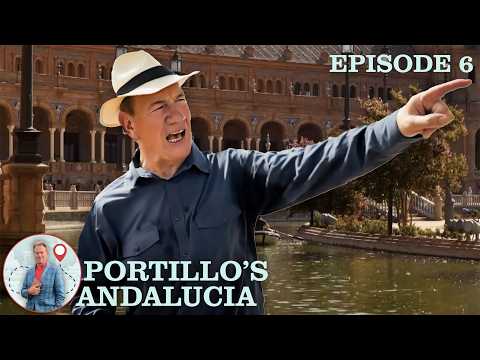
Portillo's Andalucia | Episode 6
Open in PlaceTube Watch on YouTube
Places in this video
- Seville ▶ 1:58
Michael says his tour of Andalusia ends in Seville, the city closest to his heart, which he fell for years ago and where he set up his Spanish home nearby.
- Guadalquivir ▶ 2:38
He approaches Seville from the Guadalquivir, the river that gave the city its importance and its wealth.
- Carmona ▶ 2:47
Michael's historic house is in the ancient town of Carmona, where he renovated a ruin 12 years ago and discovered three Roman mosaics.
- Torre del Oro ▶ 3:37
The Tower of Gold was part of the Almohad defenses around the city, once paired with a twin tower across the river between which a chain could be stretched to stop enemy ships.
- Seville Cathedral ▶ 4:27
Adapted from a 12th-century mosque, it is the largest Gothic cathedral in the world, built to display the might of the Spanish Empire, and holds the lavish tomb of Christopher Columbus.
- La Giralda ▶ 4:58
The cathedral spire has a square Islamic-period tower, an almost identical one exists in Marrakech by the same architect, and a baroque top named after the gyrating weather vane lady.
- Calle Sierpes ▶ 7:27
This street was the commercial heart of Seville in the 15th century, lined with cobblers and blacksmiths, and today mixes fast fashion with bespoke tailoring.
- Sombreros Maquedano ▶ 7:59
Adolfo calls it probably the oldest hat shop in Seville, dating to 1896, selling Andalusian wide-brimmed hats, classic caps and monteras; Michael tries on a calañés and has his head shape measured.
- Mercado de la Encarnación ▶ 10:47
When Seville's oldest hat shop opened there was already a food market at La Encarnación with more than 400 stalls, and it remains in place beneath the Metropol Parasol.
- Metropol Parasol (Las Setas) ▶ 11:04
Known as Las Setas, the mushrooms of Seville, it was completed in 2011, may be the largest wooden structure in the world, and its rooftop walkway gives a panoramic view of the city.
- Plaza de España ▶ 21:18
Built for Spain as the grandest national pavilion of Seville's 1929 Ibero-American Exposition, championing Spanish and Andalusian art, engineering and architecture.
- Hotel Alfonso XIII ▶ 22:42
Commissioned by King Alfonso XIII in 1928 and now owned by the city, the hotel is built around a grand cloister mixing Spanish and Islamic styles and was the first in Andalusia with a telephone in every room.
- Plaza de toros de la Real Maestranza ▶ 25:22
Michael notes that a matador was recently carried from Seville's bullring in triumph on the shoulders of an adoring crowd, and that crowds of every class flock to it.
- Puerta de Córdoba ▶ 30:42
Michael enters Carmona by his favorite route, through the Cordoba gate, which shows the town at its majestic best.
- Church of Santa María de Gracia ▶ 34:14
The largest church in Carmona, where children's mass is being said; horseshoe arches reveal it was a mosque before, and Visigothic carvings remain on a column.