 PlaceTube
Dungeness
St. Marys, United States · Videos: 23 · Map
Historic district in Georgia, United States
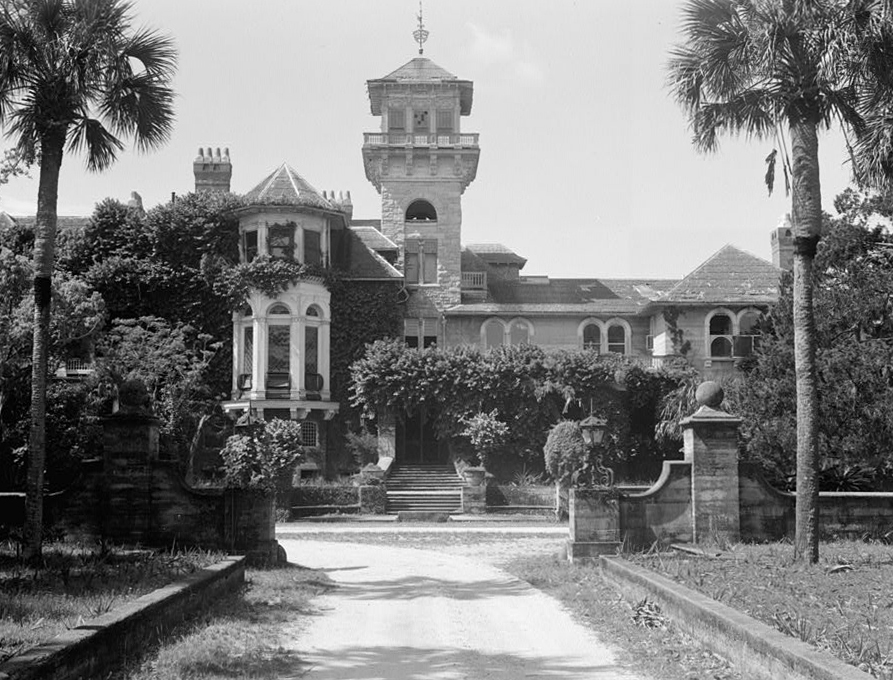
Dungeness on Cumberland Island, Georgia, is a ruined mansion that is part of a historic district that was the home of several families significant in American history. The mansion was named after a nearby sandy spit at the southern end of the island, first recorded in a land grant petition in 1765 and almost certainly named after the Dungeness headland, on the south coast of England. The first Dungeness house was the legacy of Revolutionary War hero Nathanael Greene, who had acquired 11,000 acres of island land in 1783 in exchange for a bad debt. In 1800, his widow Catharine Miller (by then…
What travel creators say
The ruins of the Dungeness Mansion, a Carnegie family estate, can be explored on the island.
The ruins of a 19th-century Carnegie family home remain here for history enthusiasts to visit.
The skeletal ruins of Thomas Carnegie's 40-room Scottish castle mansion, open to the sky since a fire gutted it in 1959; the presenter's top pick is seeing it at dawn with wild horses moving through the walls.
The haunting remains of a grand mansion once owned by the Carnegie family, now skeletal walls slowly being reclaimed by nature.
The skeletal ruins of the Carnegie family's 59-room mansion crumble into the sand, with ivy swallowing the walls.
The island was once home to the Carnegie family's Dungeness mansion, whose ruins now sit within the protected national seashore.
Thomas and Lucy Carnegie built the majestic Dungeness mansion, now a picturesque ruin with crumbling walls and moss-draped oaks that offers a poignant glimpse into the island's Gilded Age past.
The ruins of the Dungeness mansion are said to tell stories of a forgotten era on Cumberland Island.
The presenter calls the burned-out Carnegie mansion the island's most haunting site, consumed by a mysterious fire in 1959 and now ivy-clad ruins.
The mansion given to Revolutionary War hero Nathaniel Greene was later rebuilt by the Carnegie family; the boat tour views it from the water.
The remains of a once-grand Gilded Age mansion, surrounded by lush greenery and wild horses, offering a glimpse into the island's past.
The ruins of a grand Gilded Age estate that stand as a haunting reminder of the island's past.
He hikes back south on the Parallel Trail to check out the Dungeness ruins before leaving the island.
The abandoned Dungeness Mansion, built by Thomas Carnegie in the late 19th century, hosted presidents and was left in ruins after a 1959 fire; wild horses wander in front of it.
Thomas M. Carnegie brother of businessman and steel tycoon Andrew Carnegie began construction of the magnificent Dungeness residence in the late 19th century.
the 35 000 square foot Dungeness Mansion was built by Thomas Carnegie and his wife Lucy in 1884
Dungeness Mansion, built in 1884 and home to Lucy and Thomas Carnegie, was destroyed by a fire in the 1950s, believed to be arson by a disgruntled poacher; its ruins remain.
The ruins of the Carnegie family's Dungeness mansion, built on the site of earlier mansions that mysteriously burned, sit in the island's historic district.
The trail leads to the Dungeness ruins, a compound built by the Carnegie family with support buildings, a horse stable and an ice house; there is a picnic area with water here.
Ruins that tell the story of the Carnegie family and others who once lived on the island.
Lucy Coleman Carnegie made Cumberland her permanent home and built Dungeness, now in ruins, which was party central for family and friends.
The presenter shows the ruins of Dungeness, one of Cumberland Island's icons, a mansion said to have burned in a fire set by a poacher.
Standing behind the ruins, the host describes Dungeness as one of Cumberland Island's icons and imagines how beautiful it was in its heyday. The mansion burned in a fire said to have been set by a poacher.